
Industrial Automation Solutions in Malaysia: The Future of Manufacturing
11/04/2025
Why Hong’s Modular Belts Are Best for Malaysian Production Lines
15/06/2026
That is a thing about choosing a conveyor belt in Malaysia businesses often overlook. The conveyor belt you choose should suit your product, layout, hygiene, load/weight, temperature, cleaning and maintenance process and production target.
If you own a food processing, packaging or manufacturing factory in Johor Bahru, your conveyor belt is directly influencing your production process. Here’s what you should know about how to select the right conveyor belt, such as modular belt conveyor, or wire mesh conveyor belt, for your needs.
Why Conveyor Belt Selection Matters for Malaysian Industries
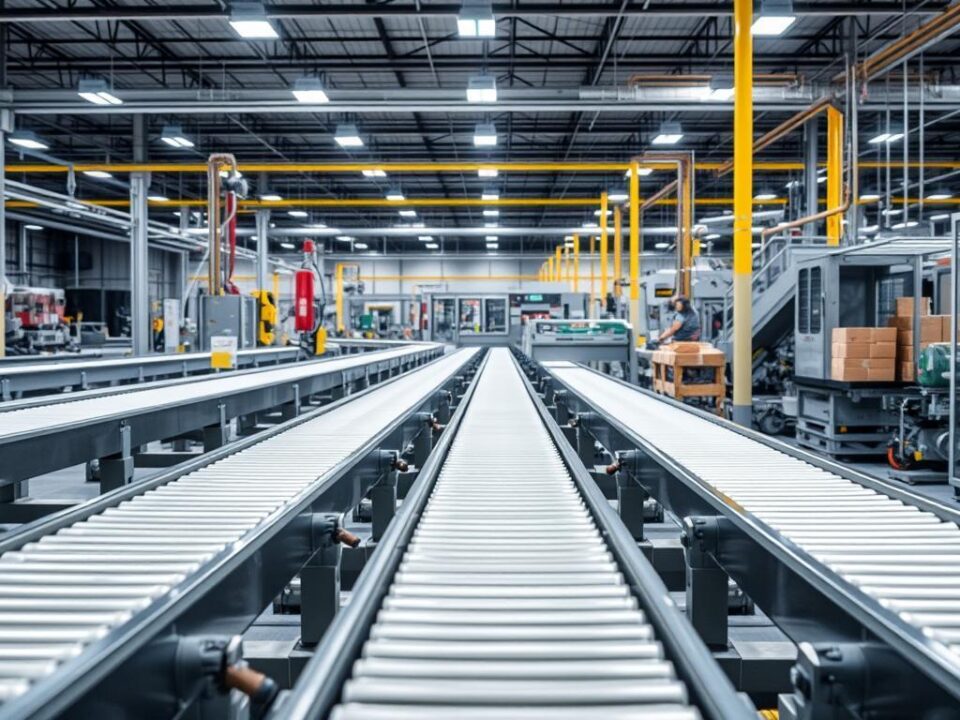
A conveyor belt may look simple from the outside, but in a real factory environment, it becomes one of the most important parts of the workflow.
Malaysia’s industries require various types of conveyor belts. The belt used in a bakery is different to that used in a palm oil mill, warehouse, electronic assembly line or metal treatment plant. They have varying needs for speed, hygiene, strength, heat resistance, drainage and product handling.
Using the right conveyor belt can help avoid tedious manual lifting, increase production speed, reduce product damage and allow a more efficient flow of the production line. It can also improve safety in the workplace as workers are not lifting heavy or repetitive loads.
But the wrong belt can cause headaches. This can lead to belt slipping, problems with tracking, regular breakdowns, contamination, inconsistent flow, or increased maintenance expenses. In some cases, the belt may still work, but it slows down the entire operation quietly every day.
That is why choosing the right conveyor belt is not only a purchasing decision. It is an operational decision.
Understand Your Industry and Application First
When looking for the right conveyor belt, it’s important to consider the right specification before you just price or material shop. For food and beverage, hygiene might be key. You’re looking for a belt that is easy to clean, durable and can be washed frequently. That’s why companies often use a modular belt conveyor system as it is durable, easy to clean and can be used for a variety of wet and dry food processing applications.
In packaging and manufacturing, you may require a smooth and gentle, fast and stable belt. If you are moving bottles, cartons, small parts or packaged goods, you need a belt that supports the product during transportation, helping to prevent additional vibration or misalignment.
For sorting and distribution, the belt needs to transport large volumes. The conveyor belt needs to be strong as boxes, cartons and packages are transported all day. Wire mesh conveyor belts are suitable for heat-related applications. Such a belt can be suitable for drying, cooling, baking, washing, freezing, or drainage and/or ventilation applications. For industrial applications, durability is key. It needs to be able to handle the weight of the product being conveyed and the environment that it is being used in.
Key Factors to Consider When Choosing a Conveyor Belt in Malaysia
1. Material Type
Conveyor belts can be made from PVC, PU, rubber, modular plastic, stainless steel wire mesh, or fabric-based materials. Each material has a different purpose.
PVC and PU belts are often used in general packaging, light manufacturing, and food-related applications, depending on the requirement. Rubber belts are commonly used for heavier materials. Modular plastic belts are useful when the operation needs flexibility, easy cleaning, and part replacement. Stainless steel wire mesh belts are suitable for heat, airflow, washing, and cooling applications.
The best material depends on what you are moving, how heavy it is, whether the area is wet or dry, and whether hygiene or temperature resistance is required.
2. Load Capacity
Not every conveyor belt can carry the same weight. If the belt is too light for the product, it may stretch, wear out faster, or become unstable.
For example, a belt used for small packaged snacks will have different load requirements compared with a belt carrying metal parts, cartons, or bulk materials. Always consider the maximum product weight, not just the average weight.
3. Operating Environment
Malaysia’s industrial environments can be humid, wet, dusty, oily, or exposed to heat. A conveyor belt used in a dry warehouse may not perform well in a wet food processing area.
If your operation involves water, oil, heat, chemicals, sharp edges, or frequent washdown, the belt material must be selected carefully. This helps prevent early damage and unnecessary downtime.
4. Cleaning and Maintenance
A conveyor belt that is hard to clean can slow down production, especially in food processing and hygiene-sensitive industries.
For businesses that clean their line daily, easy maintenance should be a priority. A modular belt conveyor is often preferred because damaged sections can usually be replaced without changing the entire belt. This helps reduce downtime and long-term maintenance costs.
5. Belt Speed and Workflow
Belt speed affects the entire production line. If the belt moves too slowly, output drops. If it moves too fast, products may fall, workers may struggle to keep up, or quality checks may become less accurate.
The right conveyor belt should match your workflow, product handling method, and production target.
Conveyor Belt Selection Guide
Use this simple guide to identify which belt type may suit your operation before speaking with a conveyor belt supplier in Malaysia.
Modular Belt Conveyor
- Good for food processing and packaging
- Easy to clean and maintain
- Suitable for wet or dry areas
- Damaged sections can be replaced
Wire Mesh Conveyor Belt
- Suitable for heat-related applications
- Allows airflow and drainage
- Common for baking, cooling, and washing
- Durable for demanding environments
PVC or PU Conveyor Belt
- Common for light production lines
- Suitable for packaging and handling
- Smooth product movement
- Cost-effective for general use
Tip: The best conveyor belt is not always the most expensive one. It is the one that fits your product, environment, cleaning process, and production target.
Modular Belt Conveyor vs Wire Mesh Conveyor Belt
| Belt Type | Best For | Key Advantage |
|---|---|---|
| Modular Belt Conveyor | Food processing, packaging, bottling, seafood handling, bakery lines, general production | Easy to clean, flexible, and easier to maintain |
| Wire Mesh Conveyor Belt | Baking, frying, drying, cooling, freezing, washing, heat treatment | Handles heat well and allows airflow or drainage |
Modular belt conveyors are ideal if you require hygiene, sanitary and easy clean and maintenance. It is made of plastic segments that interlock, so the belt can often be repaired by replacing the damaged section.
Choose a wire mesh conveyor belt if your process involves heat, washing, cooling, or drying. Its open metal design allows air, water, and heat to pass through easily.
In a nutshell, modular belts are for clean and flexible manufacturing, while wire mesh belts are for heat or drainage.
Common Mistakes to Avoid When Buying a Conveyor Belt
First, many people select solely based on cost. While a low-priced belt might seem a good deal, if it fails frequently, it will cost more in the long run. Another common error is not considering load capacity. This can lead to stretching, slippage or premature wear.
Other companies overlook cleaning requirements. This is particularly dangerous in food processing plants. Hard-to-clean belts can impact hygiene, productivity and product quality. Another issue is using the wrong material for the temperature, humidity or oil environment. A belt that performs well in a dry environment could fail in a wet environment.
Companies should also consider their growth plans. Will the conveyor belt system be able to handle this? It’s better to plan ahead of time than to have to replace it prematurely.
How a Conveyor Belt Supplier in Malaysia Can Help
A good conveyor belt supplier in Malaysia can help you select a belt product based on real working conditions, rather than just product information in a catalog. The supplier should have a good grasp of your business sector, product classification, speed and volume, area constraint, and maintenance requirement. They can even provide recommendations on conveyor belt design materials, parts replacement and installation.
This will be important for businesses in Klang Valley, Shah Alam, Penang and Johor, Melaka and other states as manufacturing sites often need immediate solutions and suggestions. If you have a bespoke production line, you may need a bespoke conveyor. This is where consultation is needed to prevent sizing problems, belt selection and layout problems.
Choosing the Right Conveyor Belt for Long-Term Performance
The ideal conveyor belt in Malaysia companies can invest in is not the cheapest nor the most technologically sophisticated. It is the right fit.
If you need hygiene, flexibility and maintenance, a modular belt conveyor might be just what you need. A wire mesh conveyor belt might be more suitable if you need to heat, cool, drain or ventilate. PVC, PU or rubber belts could work for packaging, logistics, or a more industrial environment.
Consider the product, load weight, operating environment, cleaning method, conveyor belt speed and maintenance when purchasing. This will make the choice simpler.
The right conveyor belt can help eliminate downtime, increase productivity, and prevent product damage while allowing for efficient work processes. This is not a minor improvement for any company that needs to produce quickly and efficiently. It is an investment in efficiency.